
4 Common Mistakes (Learnings) When Starting a Homestead

My first small flock of chickens died within six months of arriving at the farm. I had bought them from a breeder who promised healthy birds, but something was clearly wrong from the start. They seemed lethargic and several showed signs of what I later learnt might have been Marek's disease. Standing in that empty coop, having lost about $200 on birds, I was sad and doubted myself.
But that disaster taught me more than any book ever could. I learnt about choosing local suppliers, avoiding "breeders" and commercial breeds. I also had to learn fast, how to stop their suffering. Now I hatch my own chicks either the natural way by keeping a rooster over winter, or buying fertilised eggs from the region and using either an incubator I hire or I tuck them under a broody hen. Like this, I have created my own mix of breeds that thrive in our Norwegian climate whilst supporting local genetic diversity.
Every successful homesteader has a collection of spectacular failures. I prefer calling them learnings because that's exactly what they are—expensive but invaluable education. These mistakes teach lessons you'll carry forever, though they sometimes cost more than you'd like to pay. Each disaster I've survived built skills I use every single day now. But some mistakes can be avoided—let me try to help you.
I. Trying to Do Everything at Once
My first spring, I decided to build a chicken coop, establish a kitchen garden, start composting, and learn food preservation all at the same time. I was going to be completely self-sufficient by autumn! The enthusiasm was admirable, but the execution was chaos.
By August, I was done. Like most of us, I also have a job to earn money. Even though Norwegian summers here have 20 hours of daylight, it was still not enough. The garden suffered and nothing received the attention it deserved. I felt like I was failing at everything instead of succeeding at anything.
This is the most common mistake new homesteaders make. The excitement of starting leads to taking on too much at once. You see successful homesteads online and want to recreate everything immediately, forgetting that those operations took years to develop. More importantly, this approach often leads to abandoning projects halfway through, creating waste that contradicts the environmental values that drew you to homesteading in the first place.
Starting small gets you further faster whilst treading more lightly on the earth. When you focus on one major project per season, you actually learn the skills properly and avoid the resource waste that comes from half-finished projects. A well-managed small garden teaches you more than a large neglected one and produces better yields with less environmental impact. A few healthy chickens in a proper setup contribute more to your food security than a dozen birds in inadequate housing.
Starting with one project done well makes a positive difference. Starting ten projects poorly often creates more problems than solutions.
The key is choosing what matters most for your situation and your local ecosystem. Ask yourself what single skill will serve you longest whilst working with natural systems rather than against them. Most beginners benefit from starting with either growing food or keeping chickens—both teach observation, seasonal thinking, and daily responsibility whilst providing immediate rewards and connecting you to natural cycles.
Start This Week: Choose ONE homesteading project for this season. Write it down clearly. Put all other exciting ideas in a "next year" list where they'll wait patiently for their turn.
II. Jumping In Without a Plan
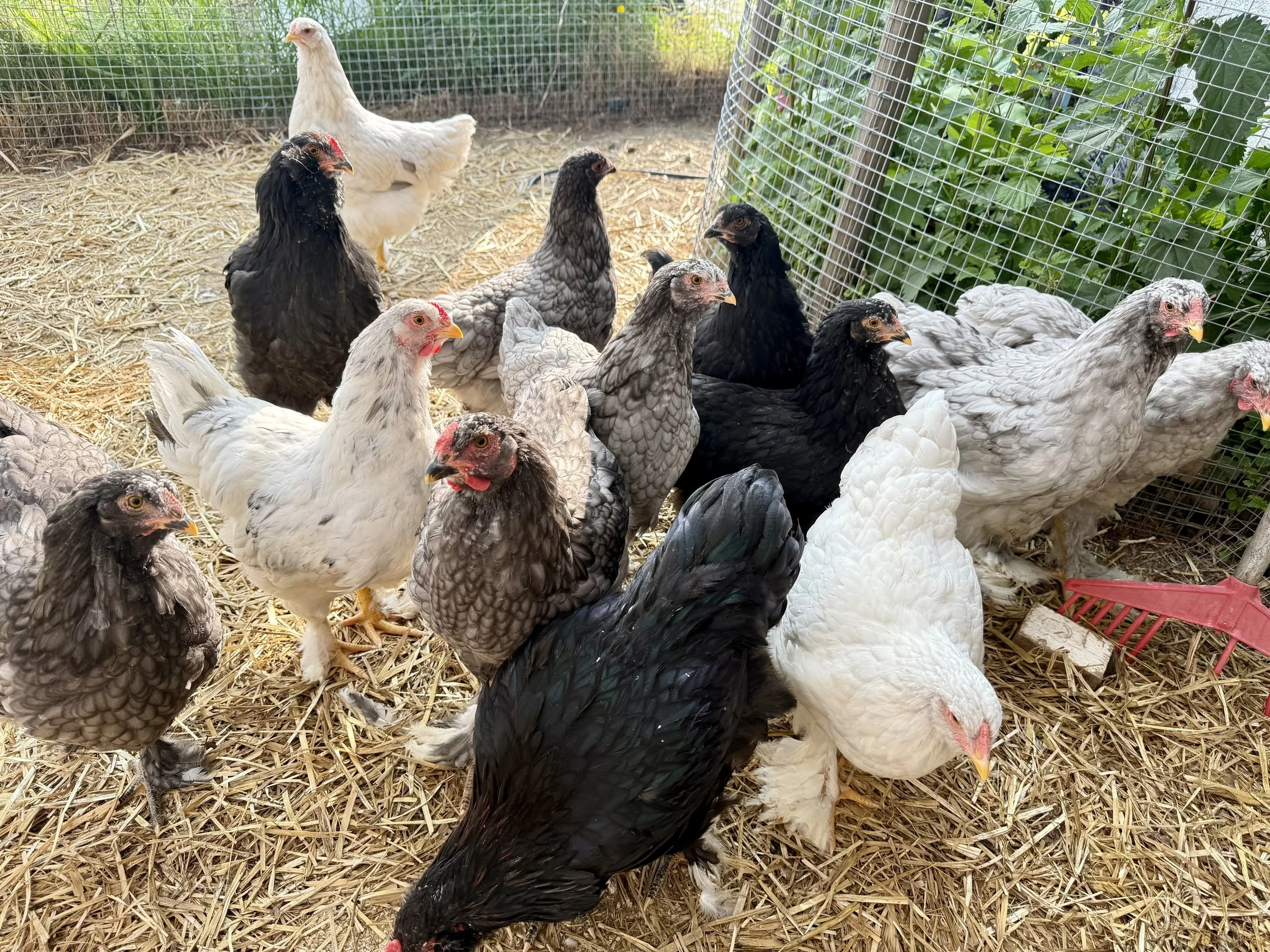
I built my first chicken coop with reclaimed materials, basic tools, and YouTube confidence. The coop housed my initial six chickens perfectly and was still fine with eight, but then I needed to separate the mothers and chicks from the other flock. The door opened the wrong direction for adding a run, because free-ranging chickens are nice, but also attract blood mites from wild birds. I still got it all done somehow, but it could have been way easier and cheaper.
Not planning ahead costs far more than money—it often wastes precious resources and energy. Time gets wasted, materials end up scrapped, and the emotional toll of redoing "finished" work can crush your motivation. Many new homesteaders jump into projects with pure enthusiasm, only to discover their approach created problems they never considered, often requiring new materials when the originals could have been used properly the first time.
The solution is learning to plan backwards from your goal whilst considering your local environment and seasonal patterns. Ask what you ultimately want to achieve, then work forward to determine the steps needed. Want fresh eggs year-round and also sell some? Consider flock size, seasonal laying patterns, housing requirements for winter, and how your setup can work with rather than against your local climate. Want to grow food for preservation? Calculate space needed, timing for harvests aligned with Norwegian growing seasons, and storage requirements. If you can't store your food somehow, all the work was for nothing—and so was the environmental benefit.
Simple planning tools save constantly whilst reducing waste. I use a whiteboard on the wall and a journal. I write down everything I did, what worked and what didn't work. I record planting dates, harvest times, weather patterns, and how different approaches affected my soil health. This simple record becomes invaluable for making better decisions each season and working more harmoniously with natural cycles.
Before starting any project, ask three essential questions: What exactly am I trying to achieve? What materials do I actually need? What could go wrong, and how will I handle it? What are plans B, C, D? This investment prevents wasting resources and countless headaches whilst ensuring your approach supports rather than degrades your local environment.
The balance lies in planning enough to avoid expensive mistakes without planning so much that you never start.Some things you learn only by doing. The trick is distinguishing between "learn as you go" projects like trying new vegetables and "plan carefully or regret it" projects like building permanent structures. Experiment with plants, plan carefully with buildings.
III. Spending too much money on the wrong things
New homesteaders often fall for expensive equipment they don't actually need. Gardening catalogues and social media make success seem dependent on having the "right" products. The truth is, plants have been growing successfully for thousands of years without specialised equipment, and our ancestors built thriving farms using creativity and local materials rather than purchasing power.
Learning to see resources everywhere transforms your approach whilst dramatically reducing your environmental footprint. Yogurt containers work perfectly as seed pots and cost nothing. Old windows become excellent cold frames. Pallets, wood scraps, or those old deck planks from the neighbour transform into sturdy raised beds. A greenhouse made of old windows is not only cheap, it's also sturdier against Norwegian winter storms than bought ones! Each repurposed item keeps materials out of the waste stream whilst serving your homestead.
The shift from consumer to resourcer changes everything and aligns perfectly with environmental values. Instead of asking "What must I buy?" ask "What do I have?" or "Who might have this?" This mindset creates community connections too. Trading eggs for building materials or preserves for equipment loans builds relationships that matter more than any purchase whilst creating a local economy that reduces transport emissions and packaging waste.
Before buying anything new, ask three people if they have it or know where to get it free. Check local swap groups on Finn.no or Facebook, farm sales, and construction sites for materials. Many homesteading "essentials" can be made, borrowed, or found secondhand for a fraction of retail prices with zero environmental cost of new production.
When you do buy something, choose quality used items over cheap new ones. A well-made old tool often outperforms modern versions, costs much less, and has already absorbed its manufacturing environmental impact. Farm sales, estate sales, and agricultural university surplus sales are goldmines for homesteading equipment.
Start This Week: Before buying anything for your homestead, ask three different people if they have it or know where to get it free. Join local swap groups and check farm sales first—you'll be amazed what's available.
IV. Expecting Instagram Results

Social media presents a dangerously polished version of homesteading life. Those perfect raised beds with precisely spaced plants? That impossibly organised tool shed? The chickens that somehow never create muddy chaos? None of that reflects the beautiful, messy reality of actual homesteading or the natural systems we're trying to work within.
My first garden looked nothing like the magazine photos I'd studied. The rows wandered drunkenly across uneven ground. Weeds sprouted faster than vegetables. My "rustic" chicken coop looked more like a disaster zone than a Pinterest project. I felt like a complete failure because my homestead didn't match the curated perfection I saw online.
Perfectionism paralyses progress faster than any other mistake and often works against natural systems. I spent weeks researching the "perfect" coop design instead of building a functional one. I delayed planting because my bed layout wasn't geometrically precise. Meanwhile, seasons passed and nothing got accomplished because nothing met my impossible standards. Nature doesn't work in perfect lines—ecosystems thrive on diversity, adaptation, and what might look like chaos but actually represents complex, efficient systems.
Learning to celebrate "good enough" revolutionised my homesteading journey and brought me closer to how nature actually works. My wonky fence keeps the chickens contained perfectly—who cares if it's not perfectly straight? My mismatched collection of repurposed containers grows beautiful vegetables whilst keeping materials out of landfill. Function matters infinitely more than form when you're learning to feed yourself and support your local ecosystem.
The real beauty of homesteading lies in its imperfections and adaptations. Every successful homestead tells the story of someone who learnt by doing, failed occasionally, adapted constantly, and celebrated small victories along the way. Your homestead will be uniquely yours because you'll solve problems with your own creativity and available resources, creating something that works with your specific land and climate rather than fighting against them.
Your imperfect, functional, evolving homestead connects you to the land in ways that perfect Instagram photos never could.
What I Know Now
Four years later, I stood in that same coop where my first chickens had died. But this time, a healthy, happy flock of 15 chickens I'd hatched myself pecked contentedly in their safe enclosure. That early disaster had taught me about biosecurity, local sourcing, and the importance of observation skills that now serve me daily whilst supporting healthier, more resilient systems.
Every mistake became a skill I use constantly. The failed coop design taught me to plan for expansion. The overwhelming first season taught me patience, prioritisation and my boundaries. The expensive purchases taught me resourcefulness and community building.
Your mistakes aren't failures—they're investments in knowledge that will serve you for decades whilst building skills that support both you and the environment. They are learnings.
